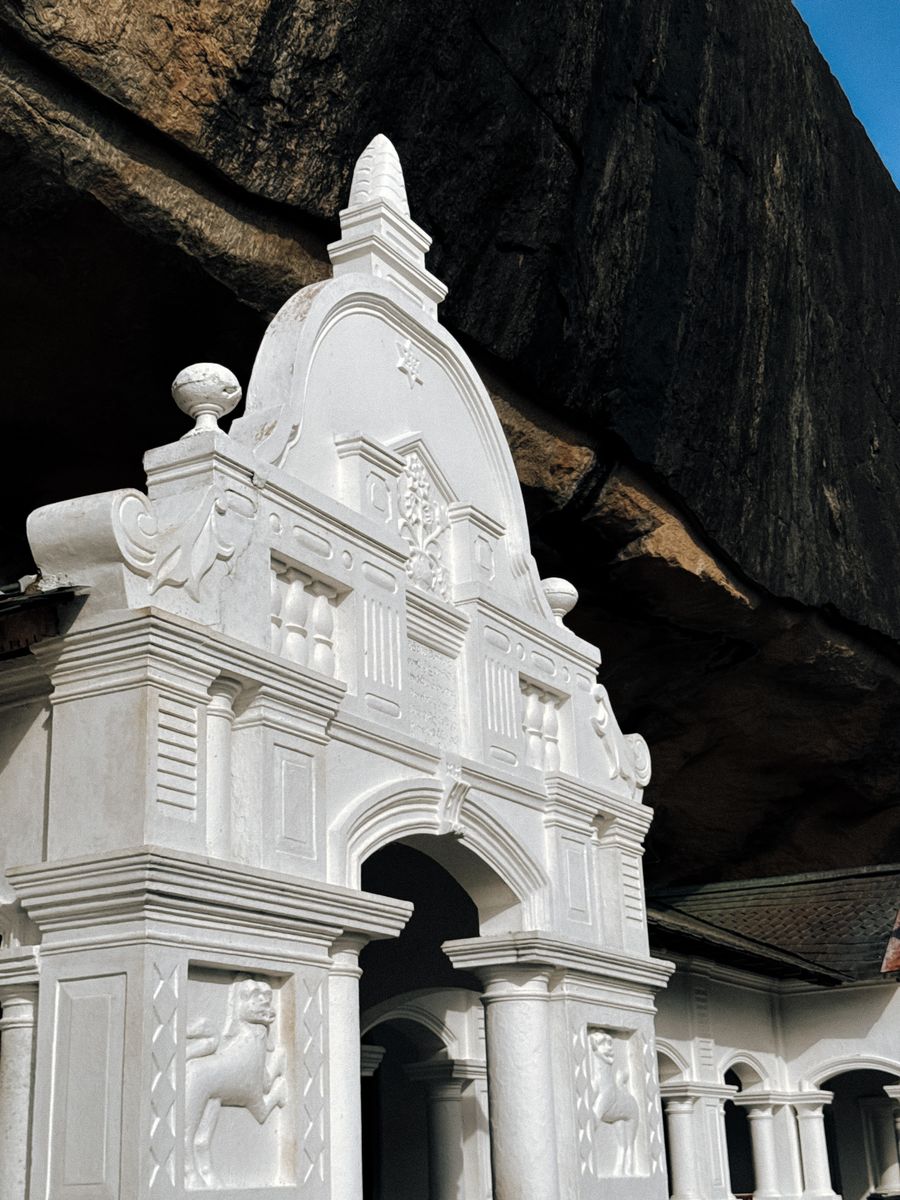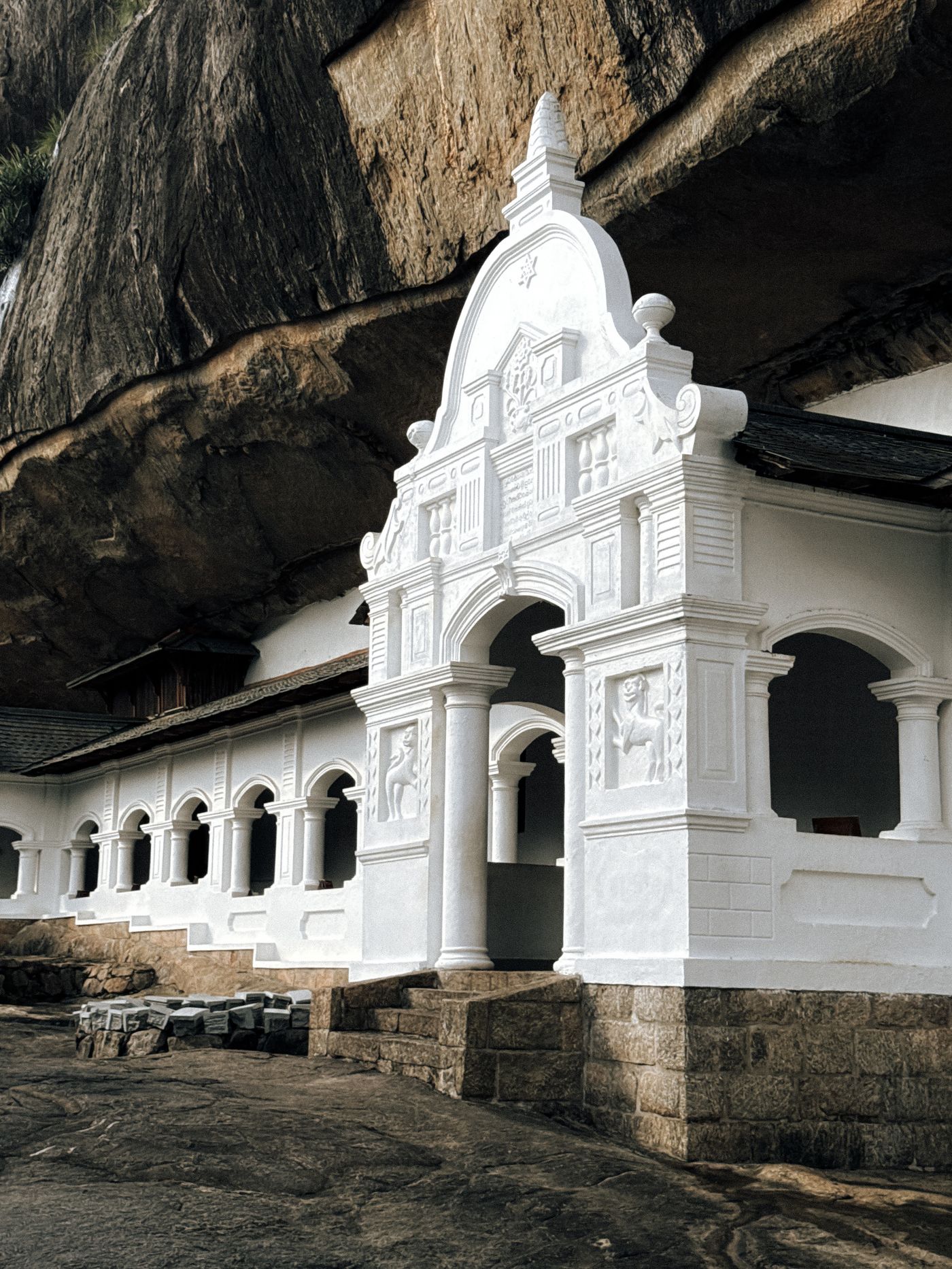
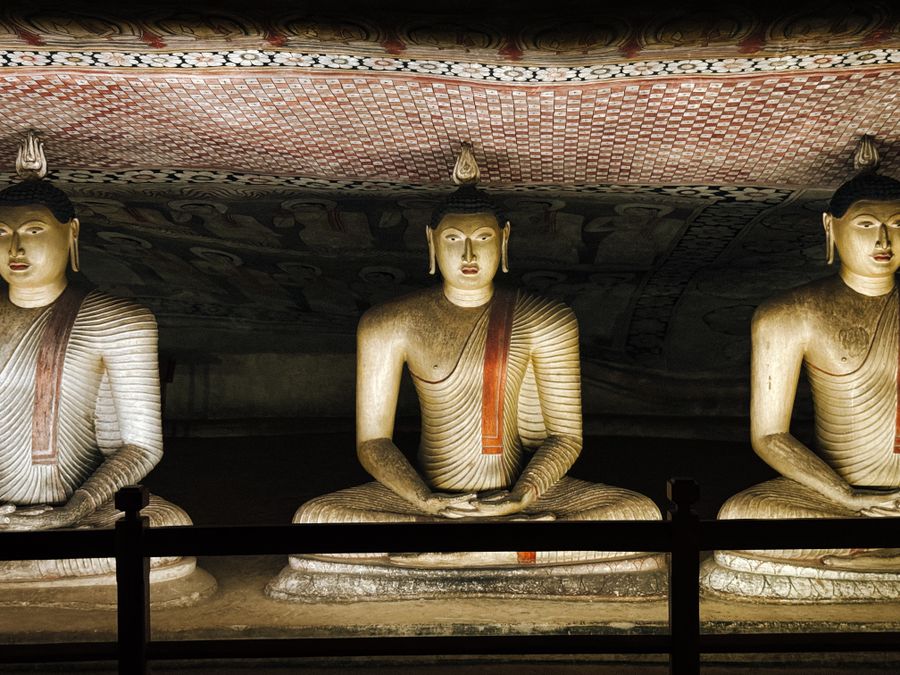
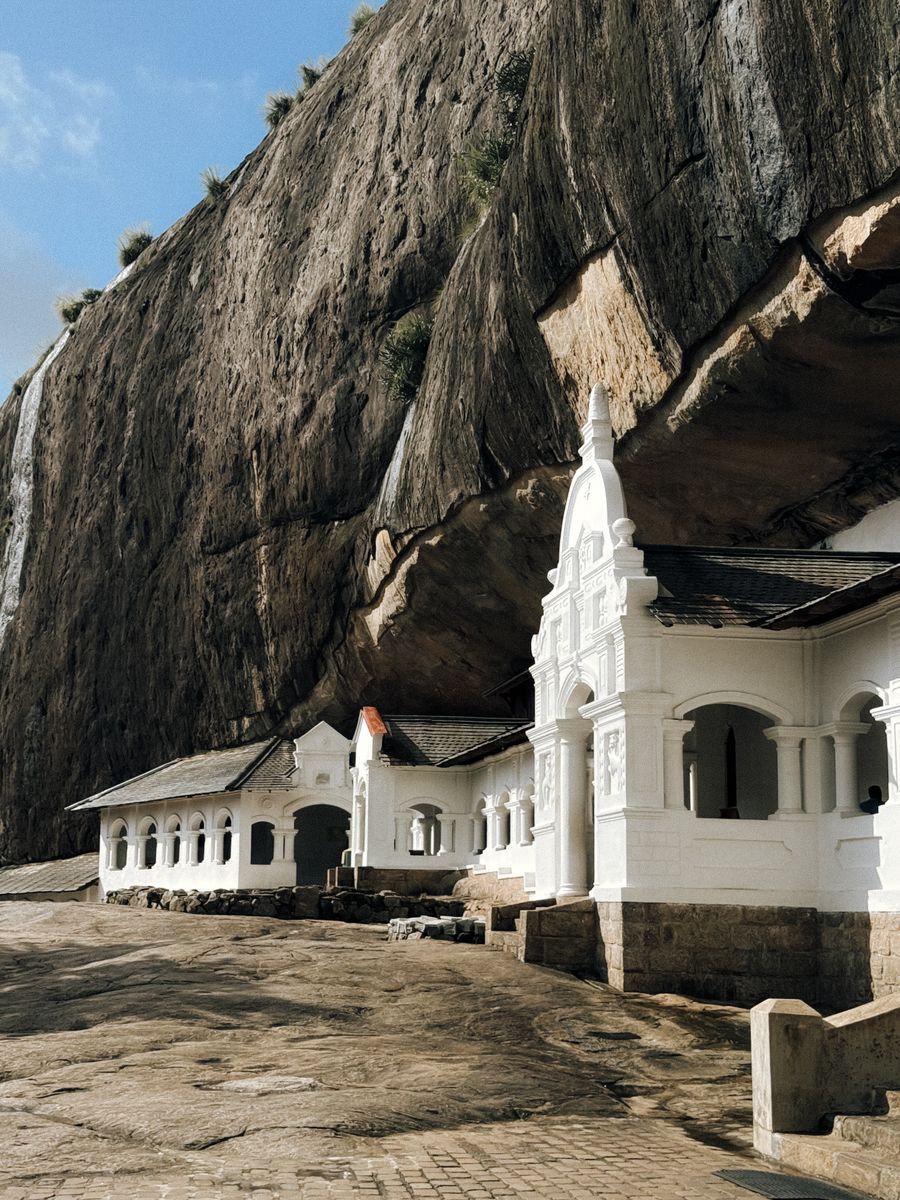
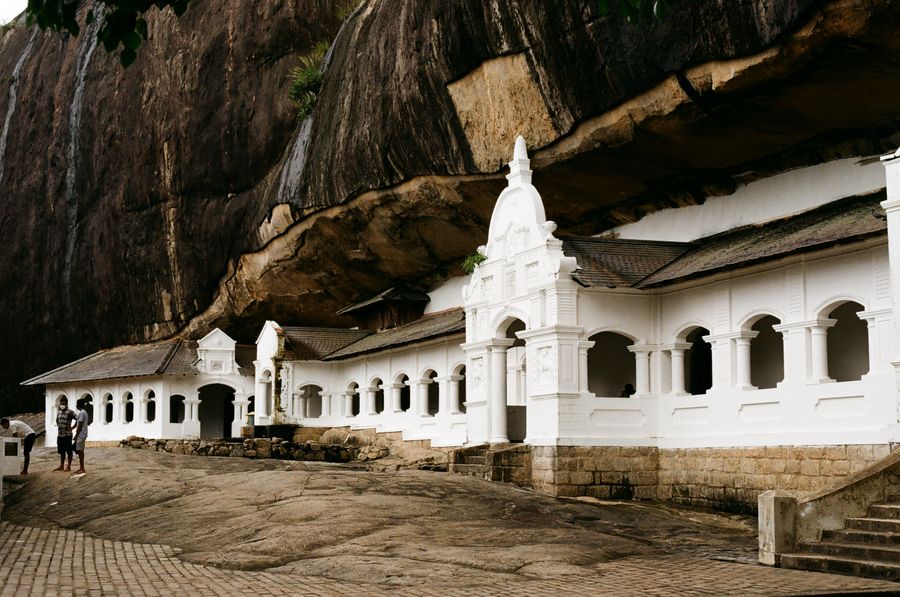
Perched on a massive rock outcrop in the heart of Sri Lanka's Cultural Triangle, the Dambulla Cave Temple (Rangiri Dambulu Viharaya) is the largest and best-preserved cave temple complex in the country. This UNESCO World Heritage Site houses over 150 Buddha statues and nearly 2,100 square metres of paintings — a treasury of Buddhist art spanning over two millennia.
The Five Sacred Caves
Each of the five caves has its own character. Cave I (Devaraja Viharaya) contains a 14-metre reclining Buddha carved from the living rock. Cave II (Maharaja Viharaya) is the largest and most impressive, with dozens of statues and ceiling paintings depicting the Buddha's life. Caves III through V contain further sculptures and murals, each added by successive kings who expanded the complex over centuries.
The Golden Temple
At the base of the rock, the modern Golden Temple features a striking 30-metre seated Buddha, visible for miles. While architecturally distinct from the ancient caves above, it serves as a museum and gateway to the sacred complex. The climb to the caves takes about 15 minutes along a well-maintained path.
Visiting Tips
Dambulla pairs perfectly with Sigiriya, just 20 kilometres away. Visit the caves in the early morning when light filters through the entrances, illuminating the paintings in natural colour. Shoes must be removed at the cave entrances — the rock can be hot in the afternoon, so mornings are more comfortable. Allow about two hours to explore all five caves thoroughly.
Best Time to Visit
Like Sigiriya, January to April is ideal. The caves themselves provide welcome shade and are comfortably cool even on hot days. The site is less crowded on weekday mornings.