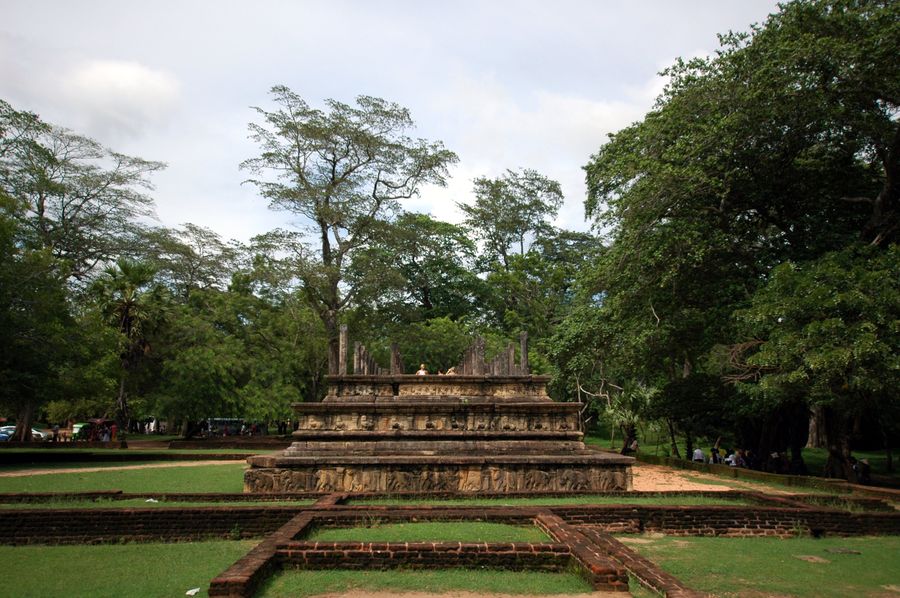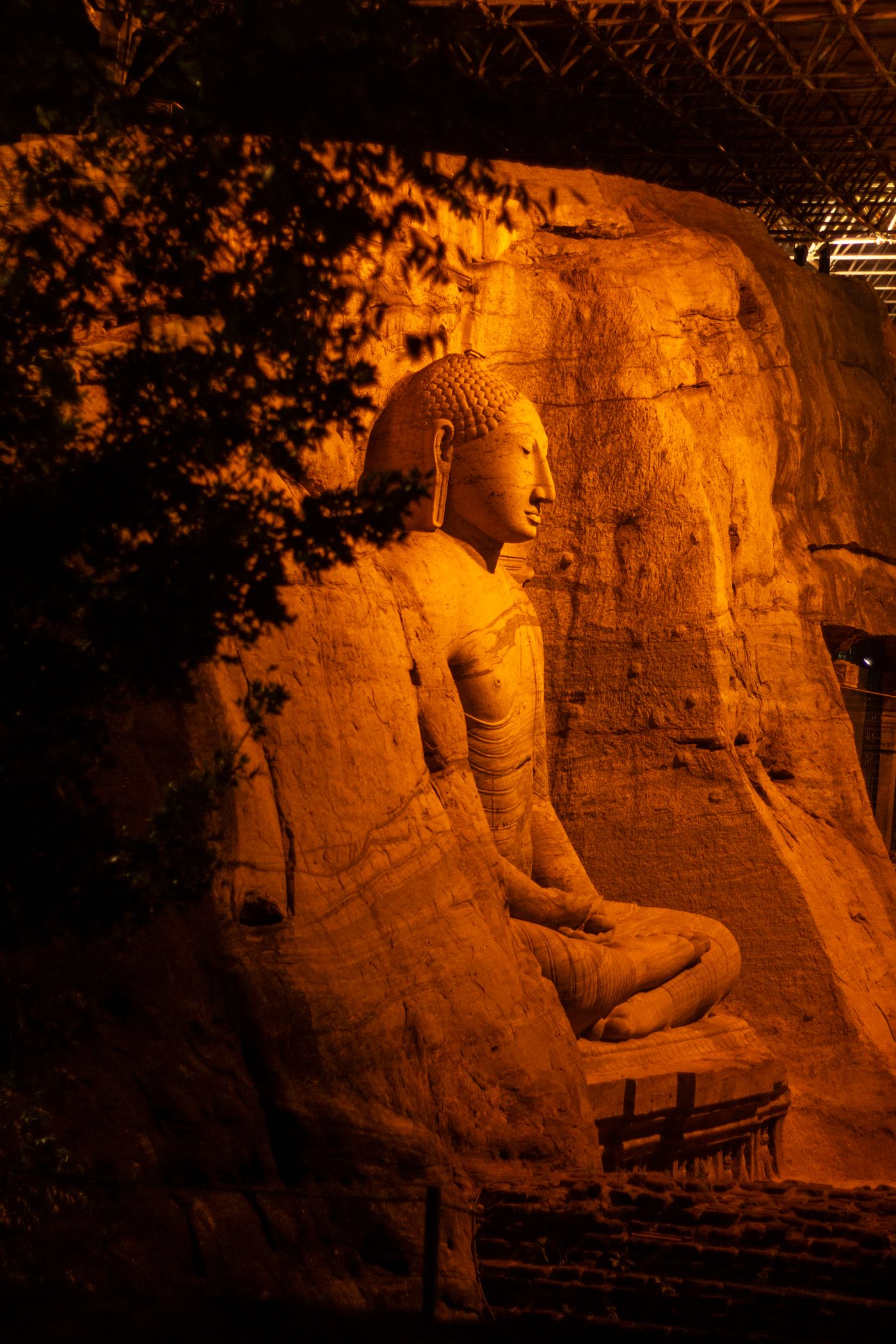
When Anuradhapura fell to South Indian invaders in the 10th century, Sinhalese kings established their new capital at Polonnaruwa. For two centuries, they built a compact, beautifully planned city that blended Sinhalese and South Indian architectural traditions — and created the Gal Vihara, widely regarded as the finest rock sculpture in all of South Asia.
The Gal Vihara
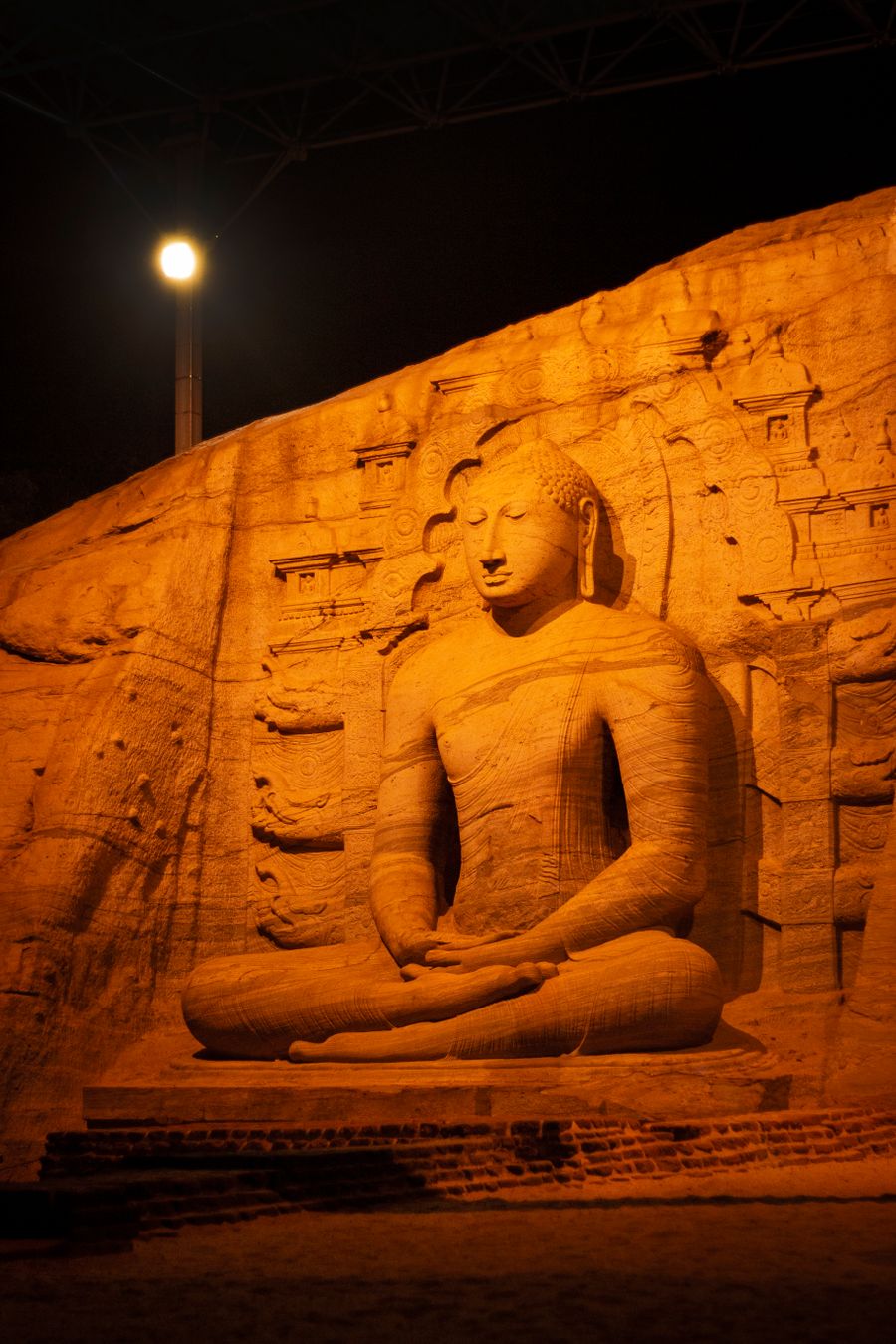
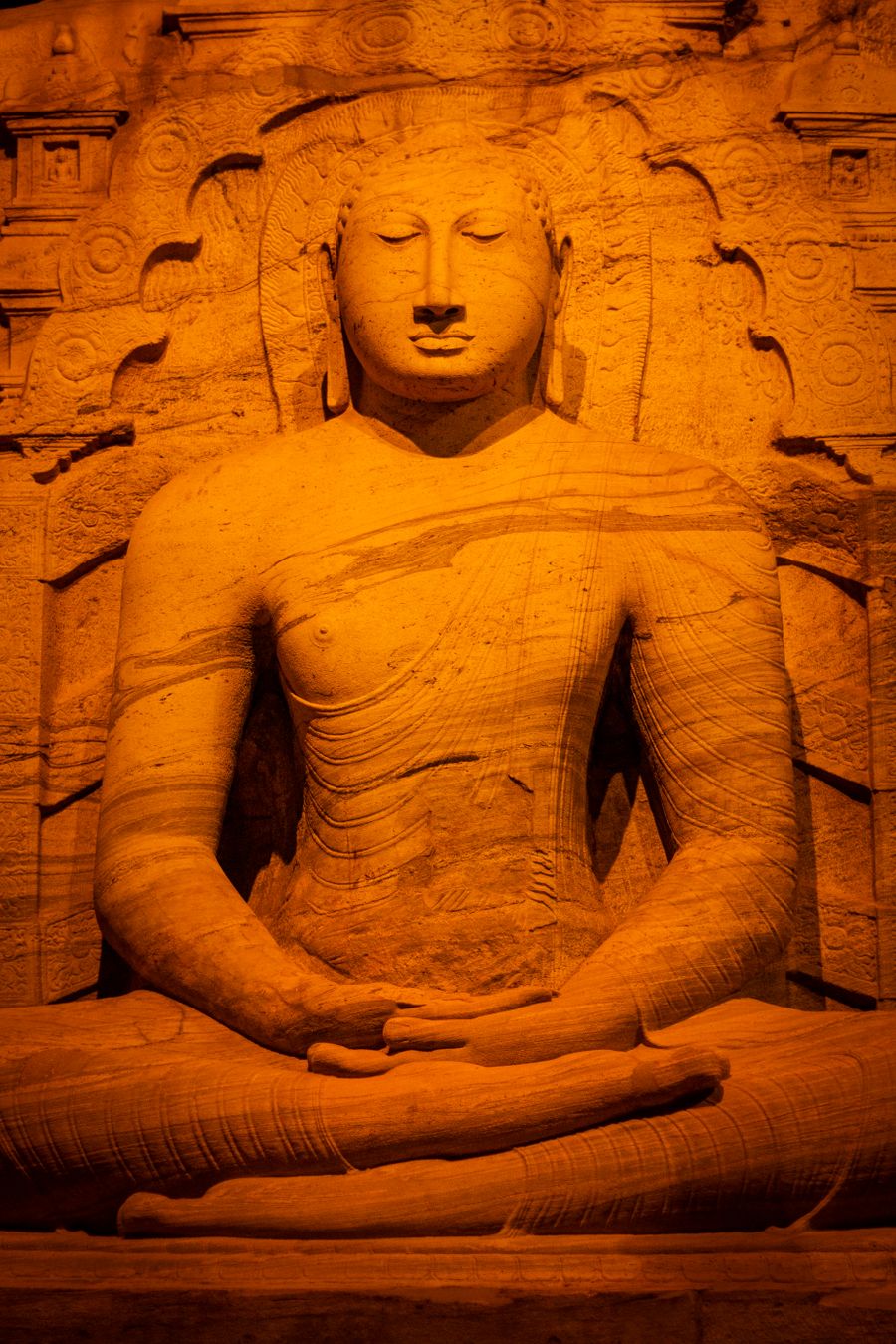
Four Buddha statues carved from a single granite face form the Gal Vihara — Polonnaruwa's crowning achievement. The 14-metre reclining Buddha, shown entering Parinirvana, is a work of extraordinary serenity. Beside it, a standing figure with folded arms and a subtle expression of sorrow is sometimes identified as the Buddha's disciple Ananda. The precision of the carving, the gentle folds of the robes, and the peaceful expressions make these among the most photographed sculptures in Asia.
The Royal Citadel
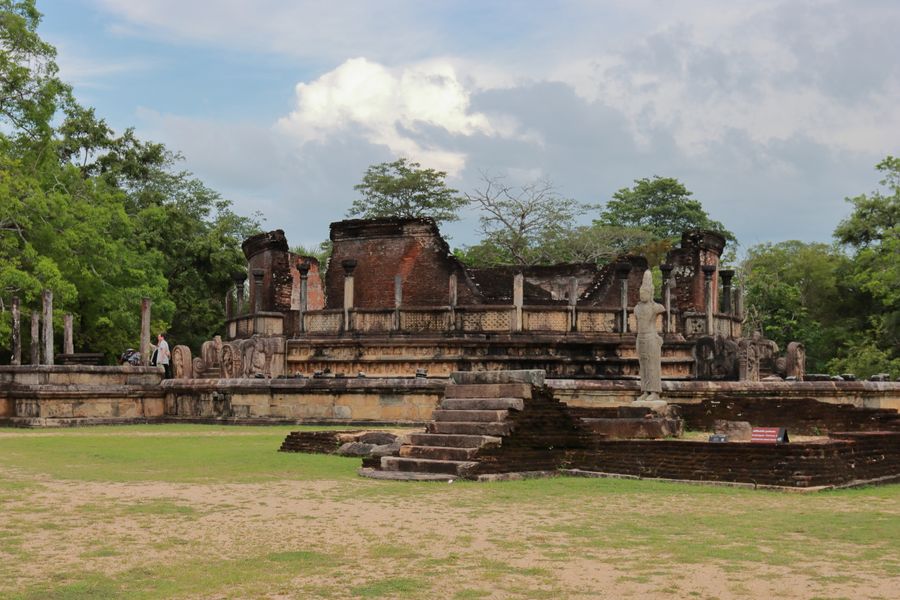
King Parakramabahu I built an elaborate royal complex including a seven-storey palace (its ruins still rise three floors), audience halls with carved columns, and the remarkable Vatadage — a circular relic house with concentric terraces, moonstones, and guard stones of exceptional quality.
Parakrama Samudra
The "Sea of Parakrama" is a massive reservoir built by the same king, covering 2,500 hectares. Its construction was an engineering feat that irrigated the entire surrounding region. Today it remains a scenic backdrop to the ruins and a popular spot for watching sunset over the water.
Best Time to Visit
May to September is driest. The archaeological park is best explored by bicycle — compact enough to cover in a half day, but with enough detail to reward a full day of exploration. Combine with Sigiriya and Dambulla for a complete Cultural Triangle circuit.